Need a Concrete Mixer Machine for Your Construction Project? Here’s How to Choose the Right One
Choosing the right concrete mixer machine is an important decision for any construction project. Whether you are working on a residential building, commercial complex, industrial structure, or infrastructure development, selecting suitable concrete mixing equipment can improve work efficiency, maintain consistent concrete quality, and reduce manual labour. With different types, capacities, and operating mechanisms available, understanding which concrete mixer machine meets your project requirements is essential.
If you are searching for a reliable concrete mixer machine in India, it is important to consider factors such as mixing capacity, motor power, construction site conditions, material requirements, operating costs, and maintenance needs. ACME Concrete Mixers Pvt. Ltd. focuses on concrete mixing equipment solutions designed to support different construction requirements. Understanding the available options can help contractors, builders, and construction companies make an informed purchasing decision.
What Is a Concrete Mixer Machine and Why Is It Important?
A concrete mixer machine is construction equipment used to combine cement, sand, aggregates, and water in the required proportions to produce a uniform concrete mixture. It automates the mixing process and helps achieve consistent results compared with manual mixing.
Concrete mixers are widely used in residential, commercial, industrial, and infrastructure construction projects. They help construction teams prepare concrete efficiently while reducing the time and physical effort involved in mixing materials.
Major benefits of using a concrete mixer machine include:
- Consistent Mixing: Helps distribute cement, sand, aggregates, and water throughout the mixture.
- Time Efficiency: Reduces the time required to prepare concrete for construction activities.
- Reduced Labour: Minimises dependence on manual concrete mixing.
- Improved Productivity: Supports continuous construction operations when used with suitable material handling and placement arrangements.
- Controlled Operations: Allows operators to manage mixing cycles and material quantities more systematically.
- Versatile Applications: Suitable for different construction activities depending on the machine’s capacity and configuration.
How Do You Choose the Right Concrete Mixer Machine for Your Construction Project?
Selecting a concrete mixer machine requires evaluating your project size, concrete requirements, site conditions, and expected production capacity. A machine suitable for a small residential project may not be sufficient for a large commercial or industrial construction site.
Here are the important factors to consider before purchasing concrete mixing equipment.
1. Understand Your Construction Project Requirements
The first step is to identify the type and scale of construction work. Different projects require different concrete production capacities and equipment configurations.
For example:
- Residential Construction: Small and medium-capacity mixers may be suitable for individual houses and small building projects.
- Commercial Buildings: Medium or high-capacity equipment can support larger concrete requirements.
- Industrial Construction: Heavy-duty mixing equipment may be required for demanding construction operations.
- Infrastructure Projects: Large-capacity mixers can support projects involving roads, bridges, and other civil engineering structures.
Understanding your daily concrete consumption helps you select a machine that matches your operational requirements.
2. Check the Concrete Mixer Machine Capacity
Machine capacity is one of the most important purchasing considerations. Concrete mixers are available in different capacities to accommodate varying production requirements.
Before selecting a machine, understand the difference between drum capacity and actual mixing output. The total drum volume does not necessarily represent the quantity of usable concrete produced in one batch.
Consider these points:
- Calculate how much concrete is needed each day.
- Determine the number of batches needed during working hours.
- Check the machine’s rated mixing output.
- Consider the time required for loading, mixing, and unloading.
- Select a suitable capacity based on current and future project requirements.
Choosing an appropriate capacity helps avoid unnecessary operating delays and underutilisation.
3. Identify the Type of Concrete Mixer You Need
Different concrete mixer machines are designed for specific construction applications. Understanding their operating mechanisms helps you choose the right equipment.
Common types of concrete mixer machines include:
Drum Concrete Mixer: Drum mixers use a rotating drum to combine concrete ingredients. They are commonly used in residential and general construction applications.
Tilting Drum Mixer: These mixers allow the drum to tilt for discharging concrete. They are useful for applications where convenient unloading is required.
Non-Tilting Drum Mixer: The drum remains in a fixed position, and concrete is discharged through a separate opening or mechanism.
Reversing Drum Mixer: These machines use different drum rotation directions for mixing and discharging concrete.
Pan Concrete Mixer: Pan mixers use rotating mixing components to combine materials. They are used in applications that require controlled and uniform mixing.
The right machine depends on the type of concrete, production requirements, and construction site operations.
4. Evaluate Motor Power and Performance
Motor power plays an important role in the operating performance of an electric concrete mixer. The required motor capacity depends on the machine design, mixing volume, material characteristics, and operating conditions.
When comparing machines, consider:
- Motor power and operating speed.
- Electrical supply requirements.
- Mixing mechanism and performance.
- Expected operating hours.
- Energy consumption.
- Availability of suitable electrical connections at the site.
A properly selected motor and mixing mechanism help support reliable machine operation.
5. Consider Construction Quality and Durability
Construction equipment is regularly exposed to cement, sand, aggregates, moisture, and demanding working conditions. Therefore, the machine’s structural quality is an important factor.
Before purchasing, check:
- Quality of the drum and supporting structure.
- Strength of the frame and mounting arrangements.
- Quality of welding and fabrication.
- Durability of mixing blades and internal components.
- Protection of electrical and mechanical parts.
- Availability of replacement components.
A well-constructed concrete mixer can support regular operations when operated and maintained according to the manufacturer’s instructions.
6. Check Transportation and Site Mobility
Construction projects may involve multiple working locations. In such situations, transportation and mobility become important considerations.
If your project requires frequent equipment movement, consider the machine’s overall dimensions, weight, wheel arrangement, and transportation requirements.
For fixed construction locations, a stationary mixer may be suitable. For projects involving multiple locations, a portable or mobile configuration may offer greater operational convenience.
7. Compare Maintenance Requirements and After-Sales Support
Regular maintenance is essential for maintaining concrete mixer performance and reducing unexpected equipment downtime.
Before making a purchase, understand the maintenance requirements and availability of technical support.
Important maintenance considerations include:
- Cleaning the drum after mixing operations.
- Inspecting mixing blades and other moving components.
- Checking bearings, belts, and drive mechanisms.
- Inspecting electrical connections and motor performance.
- Lubricating components as recommended.
- Replacing worn or damaged parts when necessary.
Choosing equipment with accessible service support and spare parts can make long-term ownership easier.
Which Concrete Mixer Machine Is Best for Small and Large Construction Projects?
The best concrete mixer depends on the amount of concrete required, project duration, construction conditions, and available resources.
Here is a general comparison to help identify a suitable machine category.
| Construction Project | Suitable Mixer Consideration |
| Individual house construction | Small or medium-capacity drum mixer |
| Small commercial buildings | Medium-capacity concrete mixer |
| Large commercial projects | Higher-capacity mixing equipment |
| Industrial construction | Heavy-duty concrete mixer |
| Road and infrastructure work | Equipment selected for required production output |
| Precast concrete production | Suitable pan or specialised mixing equipment |
These are general equipment-selection guidelines. Actual capacity and machine configuration should be determined based on the concrete mix design and project specifications.
What Are the Important Applications of Concrete Mixer Machines?
Concrete mixer machines are essential across several construction and manufacturing applications because they help prepare concrete for different structural and non-structural requirements.
Some common applications include:
- Residential Building Construction: Preparing concrete for foundations, columns, beams, slabs, and other building components.
- Commercial Construction: Supporting concrete preparation for offices, shopping complexes, and commercial buildings.
- Industrial Projects: Mixing concrete for factory structures, industrial flooring, and infrastructure facilities.
- Road Construction: Preparing concrete for selected road construction and paving applications.
- Precast Concrete Manufacturing: Supporting the production of precast concrete products according to the required mixing process.
- Civil Engineering Projects: Assisting construction operations involving drainage systems, retaining structures, and other civil works.
Each application’s production needs and material specifications determine which mixer is best.
What Mistakes Should You Avoid When Buying a Concrete Mixer Machine?
Purchasing construction equipment without evaluating its technical specifications can lead to operational difficulties and unnecessary expenses.
Avoid these common mistakes:
- Ignoring Capacity Requirements: Selecting a machine that cannot meet the project’s daily concrete demand.
- Choosing Only Based on Price: Focusing on initial cost without considering durability, maintenance, and operating expenses.
- Overlooking Motor Specifications: Purchasing equipment without checking its power and electrical requirements.
- Ignoring Material Compatibility: Not considering the type of aggregates and concrete mixtures used.
- Neglecting Maintenance: Overlooking access to spare parts and service support.
- Not Checking Safety Features: Failing to evaluate guards, emergency stopping arrangements, and other relevant safety provisions.
- Ignoring Future Requirements: Selecting equipment that may not accommodate foreseeable production needs.
Evaluating these factors before purchasing helps contractors make a more practical investment.
Why Choose ACME Concrete Mixers Pvt. Ltd. for Concrete Mixing Equipment?
Selecting the right equipment supplier is as important as choosing the right machine. Construction companies need equipment that matches their technical requirements, production expectations, and site conditions.
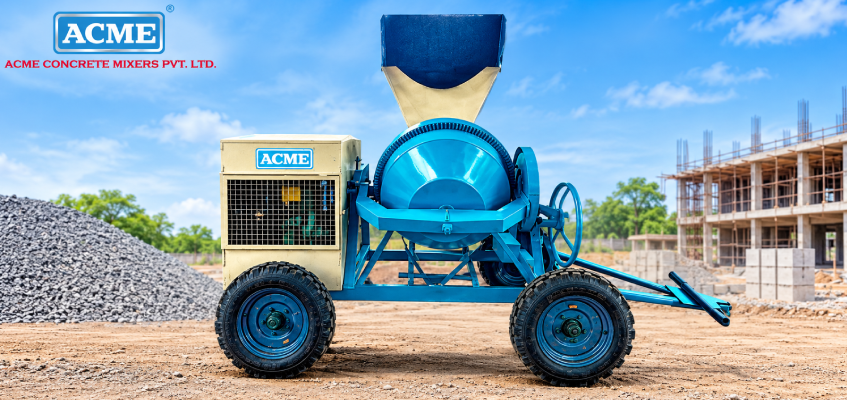
ACME Concrete Mixers Pvt. Ltd is a company associated with concrete mixer machinery and construction equipment solutions. When evaluating its concrete mixer offerings, customers should consider the available machine configurations, mixing capacities, technical specifications, and application suitability.
Important considerations when evaluating concrete mixer solutions from ACME Concrete Mixers Pvt. Ltd. include:
- Understanding the available concrete mixer models.
- Comparing machine capacities with project requirements.
- Checking the motor and mixing mechanism specifications.
- Evaluating construction quality and equipment configuration.
- Understanding installation and operating requirements.
- Discussing maintenance and spare parts availability.
Contractors, builders, infrastructure developers, and construction companies can evaluate their requirements before selecting suitable concrete mixing equipment.
Where Can You Find a Suitable Concrete Mixer Machine in India?
Finding the right concrete mixer machine in India involves comparing manufacturers, machine specifications, production capacity, and technical support.
Whether you are purchasing equipment for a construction project in Hyderabad, Telangana, or another part of India, consider the following steps:
- Identify your construction requirements and expected concrete output.
- Shortlist manufacturers offering suitable concrete mixer configurations.
- Compare machine specifications and operating mechanisms.
- Check equipment quality and maintenance requirements.
- Discuss technical details with the manufacturer or supplier.
- Evaluate the total ownership cost before making a purchase.
ACME Concrete Mixers Pvt. Ltd. can be considered when exploring concrete mixer equipment options for construction-related applications. Contact the company to enquire about suitable models, technical specifications, and equipment availability.
Frequently Asked Questions
1. What is a concrete mixer machine used for?
A concrete mixer machine is used to combine cement, sand, aggregates, and water to produce a uniform concrete mixture for construction applications. It reduces manual mixing work and helps improve preparation efficiency.
2. Which concrete mixer machine is best for house construction?
A small or medium-capacity concrete mixer is generally suitable for individual house construction. The final selection depends on the building size, concrete consumption, site conditions, and project requirements.
3. What are the different types of concrete mixer machines?
Common types include tilting drum mixers, non-tilting drum mixers, reversing drum mixers, and pan concrete mixers. Each type has a different mixing and discharge mechanism.
4. How do I select the right concrete mixer capacity?
Estimate your daily concrete requirement, determine the required number of mixing batches, and compare the actual mixing output of available machines. Select a capacity that supports your project without unnecessary underutilisation.
5. Is an electric concrete mixer suitable for construction projects?
Yes. Electric concrete mixers are suitable for construction sites with compatible electrical connections. Their suitability depends on motor power, machine capacity, operating conditions, and electricity availability.
6. How can I maintain a concrete mixer machine?
Clean the drum after use, inspect the motor and drive components, check mixing blades, lubricate moving parts as recommended, and replace damaged components when necessary.
7. What factors affect the price of a concrete mixer machine in India?
The price depends on mixing capacity, motor power, machine type, construction materials, technical specifications, configuration, and additional features. Transportation and installation requirements may also affect the overall investment.
8. Can a concrete mixer machine be used for commercial construction?
Yes. Concrete mixer machines are used in commercial construction for preparing concrete required for foundations, columns, beams, slabs, and other structural applications. The equipment capacity should match the project’s concrete demand.
9. Where can I find concrete mixer machine manufacturers in India?
You can identify manufacturers by researching their product range, technical specifications, equipment quality, service support, and suitability for your construction requirements. ACME Concrete Mixers Pvt. Ltd. is one company to consider when exploring concrete mixing equipment.
10. Why is choosing the right concrete mixer important?
Choosing the right concrete mixer helps match concrete production requirements, improve mixing operations, manage labour requirements, and support efficient construction activities.